
What is Birthright Citizenship?
UPDATE – February 10, 2025
U.S. District Judge Joseph N. Laplante of the District of New Hampshire “issued the latest preliminary injunction order from the bench in the lawsuit filed by the American Civil Liberties Union, ACLU of New Hampshire, ACLU of Maine, ACLU of Massachusetts, Asian Law Caucus, State Democracy Defenders Fund, and Legal Defense Fund on behalf of New Hampshire Indonesian Community Support, League of United Latin American Citizens (LULAC), and Make the Road New York.” (https://www.aclu.org/press-releases/federal-court-blocks-trump-birthright-citizenship-executive-order)
“The U.S. Constitution ensures that no politician can decide who among those born in this country is worthy of citizenship — a principle that the federal court in New Hampshire reinforced yet again today. President Trump’s executive order, now preliminarily enjoined in multiple lawsuits across the country, stands in flagrant opposition to our constitutional rights, values, and history. We are glad that the court agreed today that it is a blatant violation of our Constitution,” said SangYeob Kim, senior staff attorney at the ACLU of New Hampshire. (https://www.aclu.org/press-releases/federal-court-blocks-trump-birthright-citizenship-executive-order)
On January 22, 2025, President Trump issued an Executive Order stating that within thirty days, children born in the United States to non-citizens will be denied United States citizenship. Already, most, if not all, Secretaries of State are challenging this order. This Executive Order goes against the guarantee of citizenship provided by the 14th Amendment to the Constitution.
“All persons born or naturalized in the United States, and subject to the jurisdiction thereof, are citizens of the United States and of the State wherein they reside. No State shall make or enforce any law which shall abridge the privileges or immunities of citizens of the United States; nor shall any State deprive any person of life, liberty, or property, without due process of law; nor deny to any person within its jurisdiction the equal protection of the laws.” (https://constitution.congress.gov/constitution/amendment-14/)
Section 1 of the Fourteenth Amendment to the United States Constitution became the law of the land in 1868 to ensure that everyone born in the United States, including former slaves, would have equal protection under the law and be guaranteed the full privileges of citizenship. Of course, we all know that it did not work out for former slaves and their children, women, or any “undesirable” legal residents or naturalized citizens (like Asians) until much later, but that’s a story for another day.
None of us probably gave much thought to “birthright citizenship.” We all knew or at least believed that anyone born in the United States is automatically a citizen. Most of us were not even aware of this section of the 14th Amendment until recently.
Many of us did not even think about how this would affect those who run for the presidency until Trump challenged President Obama‘s legitimacy. Maybe neither he nor his followers realized that Hawaii had become the 50th state in 1959, two years before Obama’s birth or that he would have been considered a native-born United States citizen because his mother was born in America.
Very few people challenged Barry Goldwater‘s citizenship during his presidential run in 1964, although at the time of his birth, Arizona was still a territory, not a state.
Most did not question whether George Romney (the father of Mitt Romney) was eligible to run in 1968, although he was born in Mexico to U.S. residents, not even citizens.
John McCain, the Republican presidential candidate in 2008, was born to American citizens at Coco Solo Naval Air Station in the Panama Canal Zone.
And Ted Cruz, who ran unsuccessfully for president in 2016, was born in Calgary, Canada. His father was a Cuban refugee, but his mother was a U.S. citizen, guaranteeing him full American citizenship. (For more, please see Is Ted Cruz Allowed To Run Since He Was Born in Canada?)
Now, however, “birthright citizenship” has come to the fore because candidate Trump promised to end it on “Day 1” upon becoming president, a promise he tried to fulfill on the second day of his presidency. It must be noted that preventing people from getting or keeping their “birthright citizenship” has significant consequences, including being stateless, not being able to get a job, being unable to get a passport (thus being prevented from traveling outside the country), being unable to participate in elections, and so much more.
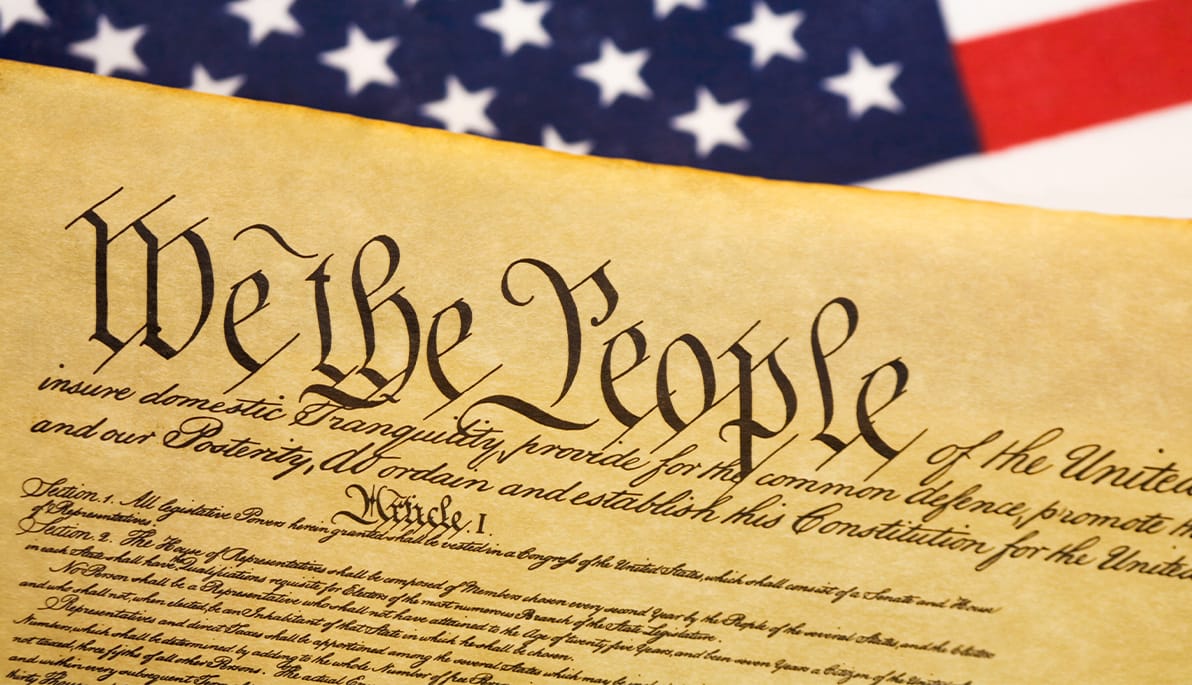
To reverse the legal status of those born in the United States to non-citizens and make Article 1 of the 14th Amendment null and void, there must be a Constitutional Amendment. The process is long and cumbersome.
First, two-thirds of the House (or 287 members) and Senate (or 66 members) must propose the amendment. That means 69 Democrats in the House and 13 Democrats in the Senate have to vote with their Republican colleagues (assuming that all Republicans in both Houses vote for it).
If there are enough votes to propose the amendment, 38 or three-fourths of the States must ratify it before it can become part of the Constitution. (https://www.archives.gov/federal-register/constitution)